
Frequently Asked Questions About Social Security Disability Benefits
Frequently Asked Questions About Social Security Disability Benefits
How do I know if I can qualify for disability benefits?
Besides being disabled, what other requirements are there for receiving disability benefits?
Why is a work history a requirement for receiving disability benefits?
As any experienced disability attorney will tell you, the reason you must have worked to be eligible to receive benefits is because the Social Security Disability Insurance program is an insurance program. Like any other insurance program, you have to pay into it in order to receive benefits. When you work, Social Security taxes are taken out of your paycheck and put into the Social Security Disability Insurance program. It is similar to how insurance premiums are taken out if you obtain health insurance from your employer. In order to qualify for disability benefits, you must have worked recently enough and long enough to achieve “insured” status.
How recently must I have worked in order to qualify for benefits?
You must be able to prove that your disability began before your “date last insured.” If you have a steady work record, your “insured” status lapses five years after you stop working.
Should I get my doctor to write a letter to the Social Security Administration?
How important is it that I continue my medical treatment after applying for disability?
How will my disability hearing begin?
Hearings usually begin with the Administrative Law Judge (“ALJ”) stating who is present and noting that your disability lawyer is representing you. The ALJ will probably ask your lawyer to verify this on the record. Most ALJs will also try to put you at ease by explaining how the hearing will proceed. The ALJ will explain that the hearing is “de novo” meaning that it is a new hearing and not affected by the previous decisions. The ALJ will also explain that he or she is not part of the office that previously denied your disability claim. He or she may or may not provide a procedural history of your claim and a statement of the issues, depending on whether your disability lawyer decides to waive a reading of those matters. Unless there is an unusual issue involved in your case, your lawyer will probably waive the reading. During the opening statement, the ALJ will give a brief description of the proposed exhibits and inquire as to whether there are any objections to the exhibits. Your disability lawyer may or may not object to some of the proposed exhibits. The judge will rule on the objections and then admit the exhibits into the record. The ALJ will also describe the manner in which the hearing will be conducted. He or she will probably explain that: (1) one person will testify at a time; (2) witnesses will be examined under oath and may be cross-examined; (3) the strict rules of evidence used in civil and criminal court will not be applied; (4) a reasonable time will be allowed to present oral argument or to file briefs about the facts and law material to the case.
How long after I receive a favorable decision will I have to wait for my Social Security disability benefits to start?
The Social Security Administration (“SSA”) usually takes one to two months to process your claim and start paying your back benefits. It can take longer if there are repayments that must be made, such as to Workers Compensation insurers or Social Services.
After you receive your favorable decision, you may also wonder if you need to do anything, such as visiting the Social Security office, to assist with getting your payments started. You only need to do this if your claim was an SSI claim. For SDI (Social Security) there is nothing you need to do. The SSA will be made aware of your favorable decision and will start processing the payments. However, if you have any children who are under 18 years old (or under 19 years old and still in high school) at any time after your “date of entitlement,” you will have to complete an application for them to also receive benefits.
How long will it take to get paid once I win my disability case?
This is a great question. It takes most people over 2 years to get through the Social Security disability process. Being paid your disability benefits in a timely manner is very important.
After your disability hearing you will receive a written decision from the Administrative Law Judge. If the decision is Favorable then you won your case. A copy of that decision will go to the Payment Center to begin processing your retroactive payment and your monthly payment. Within about 30 days the Social Security Administration, SSA, sends an Award letter. This letter explains how your retroactive payment was calculated, how much was deducted for attorneys’ fees, when the monthly benefit will begin and the amount of that benefit, when you are eligible for medical insurance and when your case will be reviewed again. You need to understand all of these aspects of your case.
After you have obtained a favorable decision in your Social Security case you will receive a check for your past-due benefits. Social Security requires you to set up a direct deposit into your checking or savings account, so the back benefits will be deposited directly into your account. Social Security no longer sends paper checks. Soon after you receive your back benefits you will probably receive a Notice of Award. A Notice of Award is a document sent by the Social Security Administration that explains your benefits. It will explain how much you will receive every month for your monthly disability benefit payment. It also shows how much of your back benefit will be paid to your disability attorney as attorney’s fees. The Notice will provide information regarding when to expect a “continuing disability review” and about your Medicare eligibility.
Payment usually begins within 60 days of the receipt of the Favorable decision. However, if you received either Worker’s Compensation or Social Service benefits the payment will take longer. Some or all of these benefits may need to be repaid before any money is sent to you.
I tell my clients to call me if they have not received a back payment within 60 days of the decision. We will then follow up to determine why the payment is delayed and what we need to do to get the process moving forward.
If the amount you receive is different than you expected, it may be because the Social Security Administration recalculated your benefit amount. There are various reasons why your benefit amount may be recalculated. For example, if all of your earnings were not posted at the time the original benefit calculation was made, then the benefit amount will be adjusted accordingly when SSA recalculates. Keep in mind that cost of living increases are also factored into benefit amounts.
You may be surprised to learn that your benefits do not begin on the date you were found disabled. They actually begin with the month of the “date of entitlement” instead of the date you were found disabled because there is a five month waiting period. Another important thing to remember is that the SSA limits payment of back benefits to twelve months before the date of your application. This means that your benefits will begin either five months after the date you were found to be disabled or twelve months before the date of your application. SSA will go with whichever is the later date. If your application is under the SSI program, there is no waiting period but benefits will only be calculated from the date you applied for disability.
On my favorable decision, what is the significance of the declaration that the Appeals Council may review this “on its own motion”? These words were on the cover sheet.
Will my Social Security Disability Benefits be Taxed?
There is no simple answer to this question because it depends on several factors. Tax law is complex and if you have specific questions about how your benefits will be taxed, you should speak with an accountant or a tax lawyer. Here is some basic information to get you started.
The IRS will determine whether you will pay taxes on your benefits by adding your adjusted gross income (from your Form 1040), one half of your total Social Security benefits for one year and non-taxable interest. The figure they come up with will be considered your total income. If you are single and your total income is greater than $25,000 you may have to pay tax on a portion of your disability benefits. If your income is over $34,000, you will probably pay tax on a higher percentage of your benefits. If you are married and your total income exceeds $32,000, you may pay tax on a portion of your disability benefits. If you are married and your income is more than $44,000, you will probably pay tax on a higher percentage of your benefits.
Even if you received a large check for back benefits, there is a chance that you may not have to pay tax on your benefits. You may be able to have your back benefits re-calculated in a way that allows them to be considered as received in the previous year.
If you receive back benefits, the Social Security Administration will send you a Form 1099 for the year in which your benefits were paid. Often, the IRS has the wrong information in the 1099. This is why it is important to review the 1099 carefully and compare the information contained in it to the information in your Notice of Award. If you find any mistakes you must alert your tax preparer. He or she may ask you for information regarding how much you actually received from Social Security throughout the year. This is why it is important for you to keep any records that reflect the amount of benefits you have received.
You should keep in mind that if your benefits become taxable, a portion of your disability attorney’s fees may also be deductible. This depends on the “2% of adjusted gross income” ceiling on miscellaneous itemized deductions. Additionally, if your long term disability insurance carrier required repayment from you, you may receive special tax relief.
Will my case be reviewed in the future if I am awarded disability benefits?
Once the Social Security Administration (“SSA”) approves someone for disability, the case is subject to an ongoing periodic review. The timing of the review varies from case to case. Sometimes, if rapid improvement is expected, the review will be done within 12 – 36 months. Otherwise the review will be every 5-7 years. The purpose of the review is to determine if your disabling conditions have become better, worse or stayed the same. There are a few things you can do to prepare yourself for the review.
The first thing you should do to ensure you maintain your benefits is to keep all of your paperwork. This includes decisions, letters, notices, and other documentation you receive from SSA. SSA may need to review this documentation when your case comes up for review. It will also be helpful in refreshing your memory of what has occurred in your case.
You should also read everything sent to you by SSA. This includes the booklets that come with your award letters and any notices that are sent to you. These documents provide a lot of helpful information. You should pay special attention to what these documents tell you about the information you have to report to SSA. Be sure to report the required information and keep copies with your other SSA information.
Are lawyer’s fees and expenses the same thing?
When will the check for attorney’s fees be sent?
What happens if Social Security does not withhold attorney’s fees from my back payment?
I’ve been turned down for disability. What do I do now?
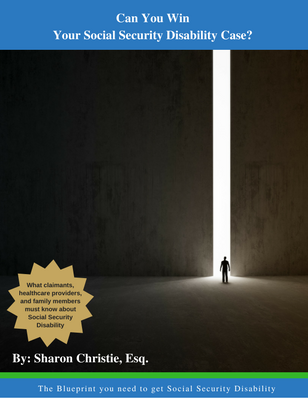
Claim your FREE copy of:
Sharon Christie’s: Can You Win Your Social Security Disability Case?
Contact Sharon Christie Law
Address: 11350 McCormick Rd Hunt Valley, MD
Phone: (410) 527-1740
Email: info@sharonchristielaw.com